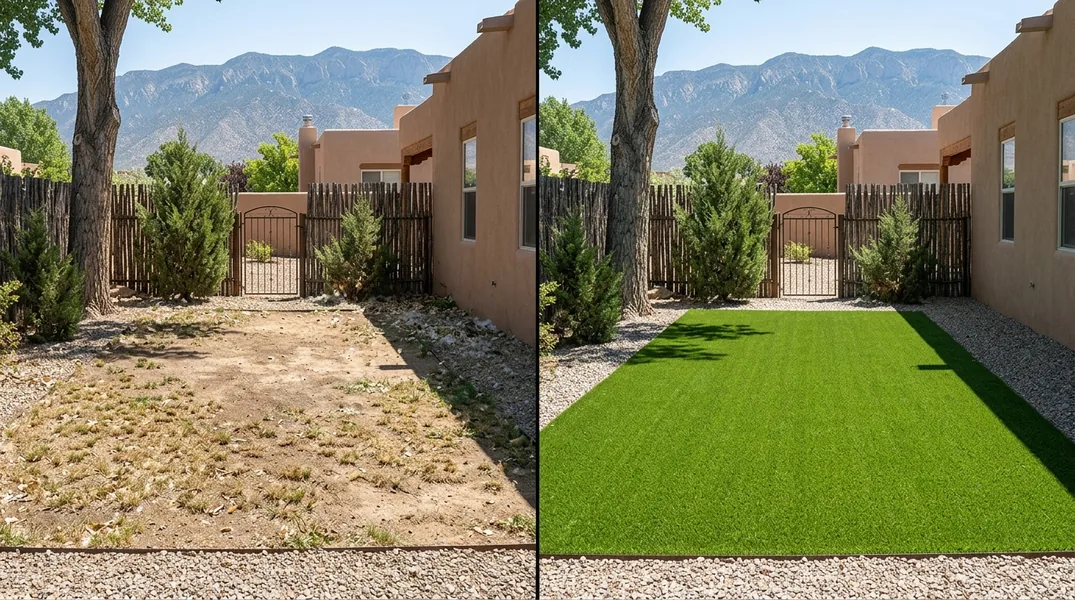
Why Albuquerque's Climate Demands Serious Base Preparation
Living in Albuquerque means contending with one of the most challenging climates in the Southwest. The high desert brings intense spring winds that can gust over 40 miles per hour, summer monsoon storms that dump inches of rain in minutes, and intense UV exposure that beats down on your yard year-round. These conditions aren't just hard on natural grass, they're hard on poorly installed artificial grass too.
Many homeowners assume that artificial turf is simply rolled out and pinned down, but that approach will fail spectacularly in our climate. Without proper base preparation and drainage planning, you'll end up with puddles that never drain, turf that shifts in the wind, or worse, a complete washout during monsoon season. The foundation beneath your artificial grass is just as important as the turf itself, and it's the difference between a lawn that looks great for 15 years and one that becomes a muddy mess within months.
Understanding Artificial Grass Drainage in High Desert Conditions
Albuquerque's monsoon season typically runs from June through September, and when those storms hit, they're no joke. Artificial grass drainage isn't a luxury feature, it's a necessity. Water needs somewhere to go, and if your base doesn't channel it properly, you're creating a swamp in your backyard. Proper drainage means water flows through and away from your turf, preventing pooling, mold growth, and the deterioration of both the turf backing and the base materials underneath.
The challenge is that many properties in our area have compacted soil or clay that doesn't naturally drain well. That's why the materials you put under artificial grass matter enormously. A quality drainage system works in layers, with each layer designed to move water downward and laterally away from your lawn. During a typical monsoon downpour, a properly prepared base will handle the volume without creating standing water. Without it, you'll see puddles that take days to disappear, and that moisture underneath the turf creates an environment where mold and mildew thrive.
What to Put Under Artificial Grass: The Foundation Matters
So what exactly should you put under artificial grass? The answer depends on your soil conditions, slope, and how much water your property typically receives. In Albuquerque, most professional installations start with a compacted base layer of crushed stone or recycled asphalt. This base layer is typically 2 to 4 inches thick and provides both stability and initial drainage. Above that, many installers add a second layer of smaller crushed stone, sometimes called crusher dust or quarry process, which compacts tightly and creates a smooth, stable surface for the turf.
But here's where many DIY attempts go wrong: they skip the artificial grass underlay or use the wrong type. An underlay isn't just padding for comfort, it's a critical drainage and protection layer. Quality underlays are designed to allow water to pass through while preventing it from pooling. Some properties also benefit from a geotextile fabric layer that sits between the base and underlay, which prevents the base materials from mixing into the underlay while still allowing drainage. The specific combination depends on your yard's existing drainage patterns, soil composition, and whether you're installing Residential Artificial Grass Installation or something more specialized like Pet Turf & Dog Run Installation.
Turf Base Prep: The Step That Determines Your Lawn's Lifespan
Turf base prep is where the real work happens, and it's where cutting corners will cost you thousands in repairs down the line. A professional base prep starts with removing existing grass or debris and then assessing your yard's natural slope and drainage. In some cases, the slope needs adjustment to ensure water naturally flows away from your home's foundation and toward designated drainage areas. The ground is then compacted to create a stable, level surface that won't shift or settle unevenly over time.
The compaction step is critical and often overlooked by inexperienced installers. If the base isn't properly compacted, you'll see the turf settle unevenly, creating divots and bumpy areas that collect water. In Corrales and surrounding areas where soil conditions vary widely, this assessment is especially important. Professional installers use plate compactors or hand tampers to achieve proper compaction, and they check the work throughout the process. This isn't a step you can rush, and it's the foundation upon which everything else depends. When spring winds hit or monsoon rains fall, a properly prepped base keeps your turf in place and your yard draining correctly.
Artificial Grass Underlay: Choosing the Right Product for the Desert
The artificial grass underlay is your second line of defense against moisture problems and instability. There are several types available, and not all are created equal for high desert climates. Closed-cell foam underlays are popular because they provide cushioning and some drainage, but in areas with heavy monsoon activity, they can sometimes trap moisture. Open-cell foam underlays and rubber-based underlays typically offer better drainage performance, especially when paired with a solid base prep strategy. Some premium underlays include antimicrobial treatments that help prevent mold growth in the moist environment that can develop under artificial grass in humid conditions.
The thickness of your underlay also matters. Thinner underlays (around 6mm) offer basic drainage and some cushioning, while thicker options (10mm or more) provide better shock absorption and superior drainage capacity. If you're installing Pet Turf & Dog Run Installation, you might want a thicker underlay to handle the extra wear and provide better cushioning for your pets. The right choice depends on your budget, your yard's specific drainage challenges, and how you plan to use the space. A professional assessment can help you choose the underlay that will perform best in your specific situation.
Spring Winds and Monsoon Storms: How Proper Installation Protects Your Investment
Spring winds in Albuquerque can be brutal, and they test every aspect of your artificial grass installation. Wind stress pulls on the turf, and if it's not properly secured and if the base isn't stable, you'll see wrinkles, bunching, and shifting. Monsoon storms, on the other hand, test your drainage system. When an inch of rain falls in 30 minutes, your base prep and underlay need to handle that volume without creating standing water or allowing moisture to back up underneath the turf.
Proper installation addresses both challenges. The turf is secured with landscape staples or adhesive applied strategically to prevent movement, and the base and underlay system is designed to shed water quickly. Edging is installed correctly to prevent the turf from peeling back at the edges when wind stress occurs. Seams are sealed properly to prevent water from seeping in at weak points. When you invest in professional Residential Artificial Grass Installation, you're paying for expertise that understands these desert challenges and builds a system designed to withstand them for years to come.
Getting Professional Base Prep Near Me: When to Call the Experts
If you're considering artificial grass for your Albuquerque home, the best investment you can make is hiring professionals who understand local conditions. Base prep isn't glamorous, and it's easy to underestimate its importance, but it's the single most critical factor in whether your artificial grass installation succeeds or fails. A professional assessment of your yard's drainage, slope, and soil conditions takes the guesswork out of the equation and ensures your base is built to last.
Albuquerque Turf Installation has years of experience installing artificial grass in high desert conditions. We understand the challenges posed by spring winds and monsoon storms, and we build every installation with those challenges in mind. From initial site assessment through final turf installation, we handle every detail of base prep and drainage planning. If you're ready to transform your yard with a durable, low-maintenance artificial grass installation that will handle whatever our climate throws at it, contact us today for a free estimate. You can also reach us at (505) 420-5402 to discuss your specific project and learn more about how proper base preparation protects your investment.
Looking for a professional artificial grass installation company in Albuquerque? Albuquerque Turf Installation responds fast for all your artificial grass installation needs.
Get a Free Quote